


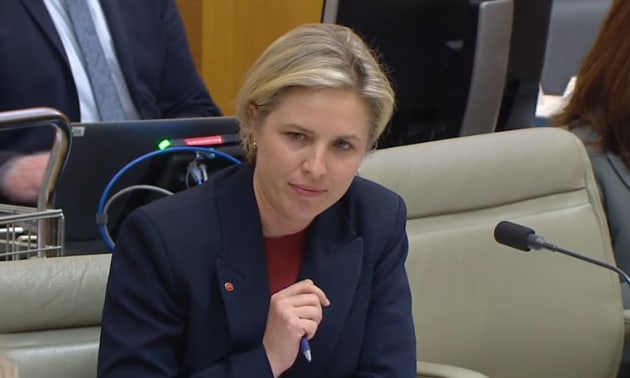
Two senators joined forces earlier this week to grill CASA over the need for engine failure after take-off (EFATO) training in twin-engined aeroplanes.
NSW Liberal Senator Jess Collins and Nationals Senator Susan McDonald from QLD questioned CASA pointedly in the Regional and Rural Affairs and Transport (RRAT) senate estimates committee, citing the number of people killed during training in the past, and asking CASA if they were prepared to take responsibility over the next incident.
Twin-engine EFATO training, also called a V1-cut, involves an instructor shutting off one engine in the critical moments after take off and assessing how the pilot flying manages the asymmetric situation.
"Do you accept that for aircraft that are not supported by a simulator in the country–if you don't have a simulator for that particular aircraft–pilots are forced to repeat dangerous simulated engine failure manoeuvres in every aircraft type they fly, which multiplies the risk for pilots who operate more than one type?", Collins asked.
"We've had in place for many years an international standard that, above a certain size of aircraft–generally air transport category aircraft–the requirement is to use simulators," CASA Executive Manager National Operations Steve Campbell responded. "That's standard. Below that, there's an option that, if it's available in Australia, they can use it in Australia."
Collins then noted that in the past 20 years there have been no fatalities in turbine-powered aircraft when one engine failed after take-off, but since 1995 there have been at least 13 killed in training for the same scenario, including the crash of a Conquest at Renmark in 2017 that killed the crew and a CASA inspector.
Collins zeroed-in on the requirement for pilots to do two checks per year on each aircraft type, which she stated increased the danger to pilots.
"My understanding is that now they have to do more of them across a lot of different types of aircraft," Collins said. "Would you accept, having the understanding of that–and also the understanding that pilots are dying practising failures that almost never kill any pilots in real life–that you're forcing repeated exposure to known fatal-risk manoeuvres, and that contradicts the requirements of reducing risk?"
"What I would say is that I'd like to go through the information in a bit more detail than that," CASA CEO and Director of Aviation Safety Pip Spence replied. "I totally understand. We lost one of our own CASA employees as one of those people that you mentioned in those numbers.
"It is something we take very seriously, and we have looked at it. I suppose, with everything, there is that need to make sure that people have had that proficiency checking, but I'm happy to go through the numbers that you've provided in a bit more detail and also explain why we're doing what we're doing."
Collins then put the onus of responsibility on CASA, citing the low chance of twin-engine EFATO outside of training.
"These single engine go-arounds [SIC] can kill them instantly," Collins said. "This stuff happens in real life–there's almost zero chance, and you're making some of these pilots do it eight times a year, and they have families.
"If another pilot dies performing a mandatory simulated engine failure, will CASA accept responsibility for creating that risk?"
"Obviously, it's always distressing when there are fatalities," Spence answered. "As I said, CASA felt it very strongly when we lost one of our own. I totally understand what you're saying about real life–these are lives. They've lost their family; they've lost their future.
"We'll see what the ATSB recommends as a result of its investigation, which is currently underway for the most recent accident. And, as I said, we'll look to see the details. As we've said, we don't just make these things up to put people at risk."
Senator McDonald, who chaired the still-born senate inquiry into the GA industry between 2019-22, then called for CASA to stop demanding EFATO training in twins.
"I think Senator Collins is raising an issue," McDonald said, "and I would be saying, 'We will stop this requirement immediately while we demonstrate that this is actually a safe requirement,' as opposed to saying, 'We're going to wait until somebody else dies.'
"It's to reverse the onus of proof. I would stop doing it immediately because, as you said, at least eight people have died and possibly more.
"I think Senator Collins has raised a really serious issue, and, unless you can demonstrate why you would continue with this practice, you should stop it immediately."
In 2012, CASA mandated simulator training for "non-normal" operations for twin-engined aircraft of 10-19 seats where an appropriate synthetic training device (STD) is available in Australia. For aircraft above 20 seats, the training can be done in Australia or overseas.