


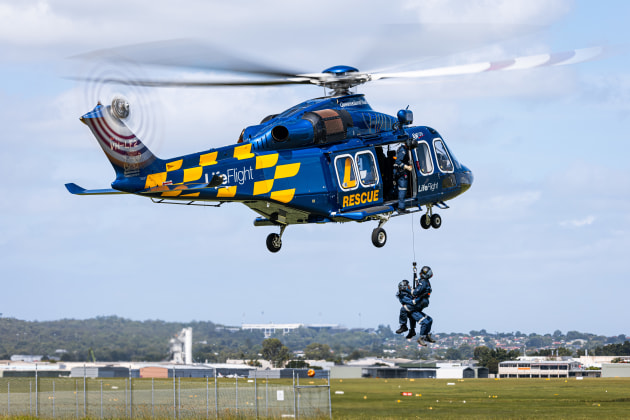
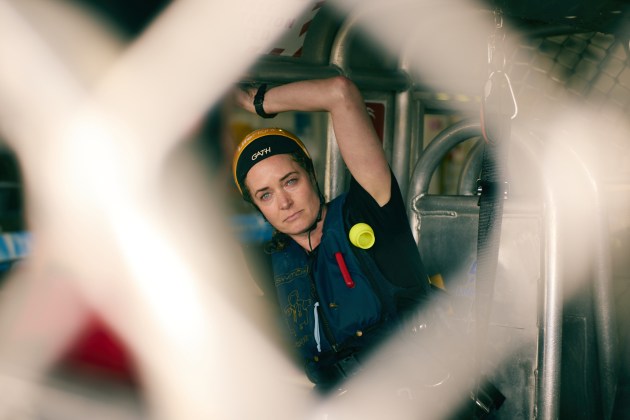
LifeFlight has added 33 new critical care doctors to its aeromedical workforce, strengthening its capacity to deliver emergency retrieval services across Queensland.
The new retrieval registrars recently completed a week of intensive aeromedical training at the LifeFlight Training Academy at Brisbane Airport before deploying to bases across the state, including the Darling Downs, Sunshine Coast, Wide-Bay Burnett, Maranoa, North Queensland and Brisbane.
Dr Bassim Jebeili is one of eight new critical care doctors joining the Brisbane crew. He said his connection to aeromedicine began in childhood.
“I grew up in a very small town in the Northern Territory and I accidentally broke a window inside my house and cut my right arm,” Dr Jebeili said.
“There was a lot of bleeding and being so far away from any tertiary hospital, we had to have a retrieval team come and get me.
“Retrieval medicine and a service like LifeFlight is incredible and I am here because of that.”
Dr Mathilde Enevoldsen is among five new doctors joining the Townsville base, having relocated from Denmark.
She said her interest in Australian aeromedical services began 16 years ago while working briefly at a cattle station near Mount Isa.
“The day before I got there, the farmer I was working for was trampled by a cow,” Dr Enevoldsen said.
“He came and picked me up and he was definitely in a lot of pain. We had to take him to the hospital. Turns out, he had broken all the ribs on one side.
“Luckily, he was able to go by car, but it got me thinking. Ever since then, I’ve wanted to work for the helicopter services here in Australia.”
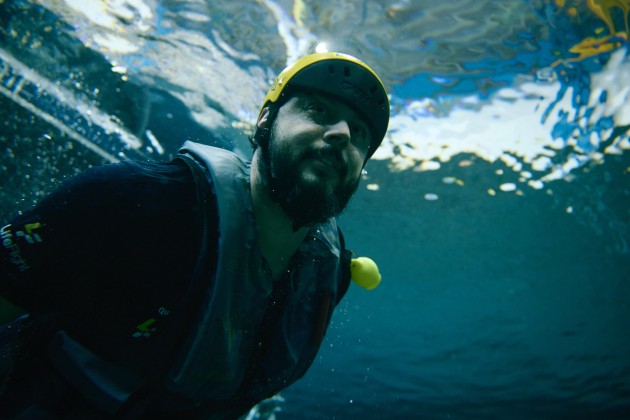
The doctors undertook specialised training including Helicopter Underwater Escape Training, sea survival, rescue winching and complex clinical scenarios to prepare them for the operational environment.
LifeFlight HUET Manager Mick Dowling said the program was designed to build confidence and resilience.
“Our mission is to have the doctors skilled with the confidence to be able to deal with any aviation situation that they may be faced with,” he said.
“The common response we get from them after the completion is that it was challenging and uncomfortable, but overall, an amazing experience.
“It’s highly unlikely the aircraft will be required to be ditched into the water, however all crew are trained should they face that situation.”
LifeFlight Deputy Chief Aircrew Officer Todd Seymour said winch training was critical to preparing doctors for remote and unpredictable missions.
“The doctors learn multiple exercises. They learn how to be winched out of the aircraft by themselves, how to be winched out of the aircraft with a rescue crewman or paramedic and learn how to accompany a stretcher into the aircraft,” he said.
“They’re going to remote areas across Queensland and they could be in dense bushland or out to sea off a cruise ship, so it’s important they’re delivered the training they need to perform these roles to a high and safe standard.
“No two days are the same for us at LifeFlight.”
Clinical training was also conducted at the Queensland Combined Emergency Services Academy, where the new recruits worked through realistic scenarios including multi-vehicle collisions and patient extraction exercises alongside Queensland Fire Department personnel.
LifeFlight now employs more than 180 medical professionals, including doctors, nurses and paramedics, making it Australia’s largest employer of aeromedical doctors.
In 2025, LifeFlight assisted 8,838 Queenslanders, a 4.2 per cent increase on the previous year. Most critical care operations are conducted on behalf of Queensland Health, tasked by Retrieval Services Queensland within the Queensland Ambulance Service.